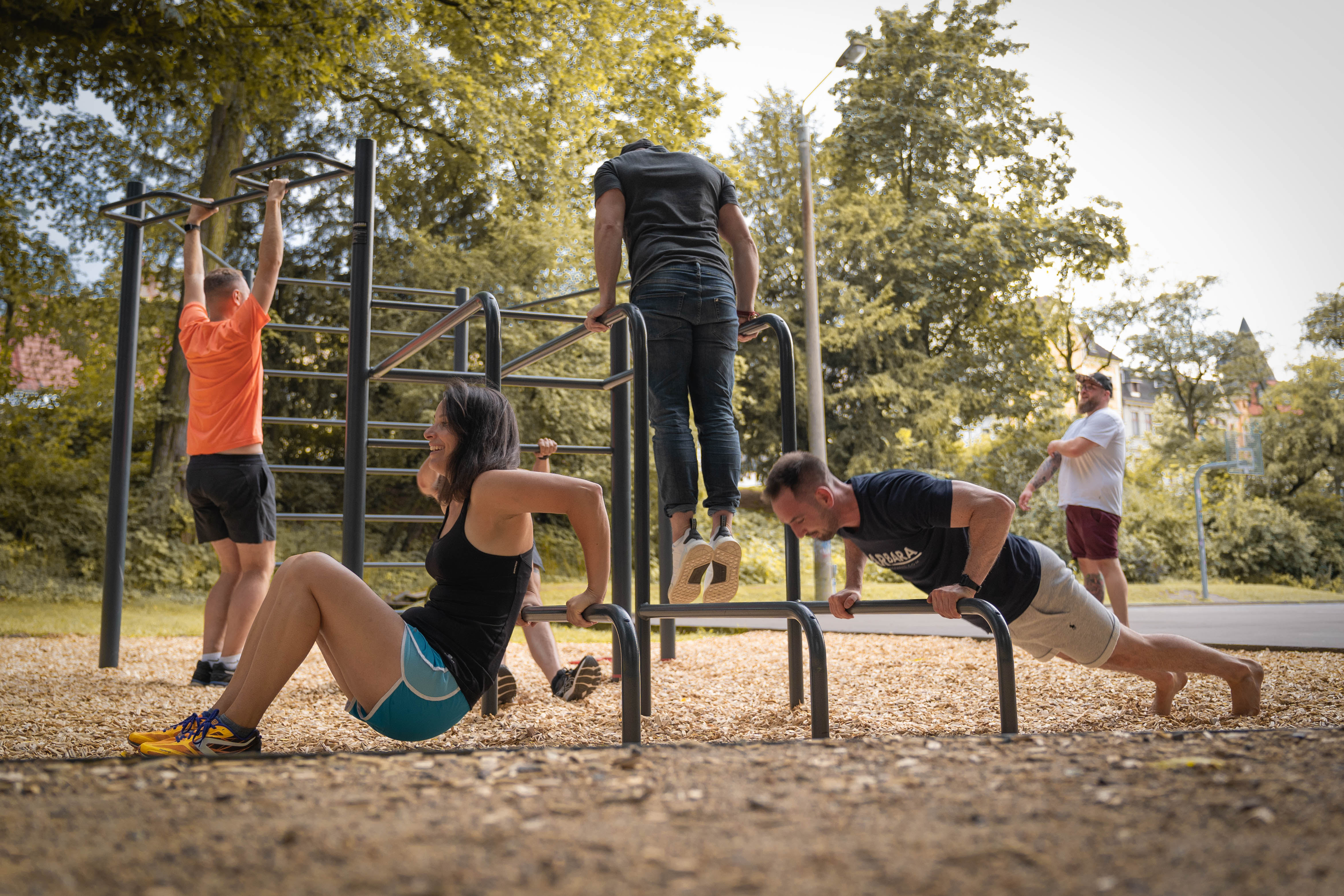
When a schoolyard offers nothing to do, energy has no outlet. A permanent exercise space gives breaks structure: shared challenges, clear stations and a reason to move together. It does not replace prevention work – but it gives school social workers and teachers a tool they can use every day.
Why structure helps
- Clear stations and exercises channel energy into a shared activity
- Challenges at different levels create success experiences
- Training together builds respect and team spirit
- Older pupils can act as role models and mentors
How school social work can use the space
In the Startchancen programme, Pillar III strengthens multi-professional teams. A calisthenics station gives them a low-threshold tool: supervised break offers, girls’ or boys’ groups, prevention projects or simply a place to talk while training.
Realistic expectations
An exercise space is not a cure for every conflict. Its effect depends on how the school integrates it – with rules, supervised offers and involvement of the pupils. That is why the pedagogical concept matters as much as the equipment.
Share this page with your school authority or staff
Frequently asked questions
Does an exercise space reduce conflicts?
It can support a calmer break culture by giving energy a direction. The effect depends on the school’s overall concept; we do not promise measurable results.
Does the station need supervision?
BARbara is built to DIN EN 16630 for public outdoor use and can be used without permanent supervision. Usage rules are set by the school.
How many pupils can train at once?
The hexagonal BARbara system is designed for 8–12 people training simultaneously.