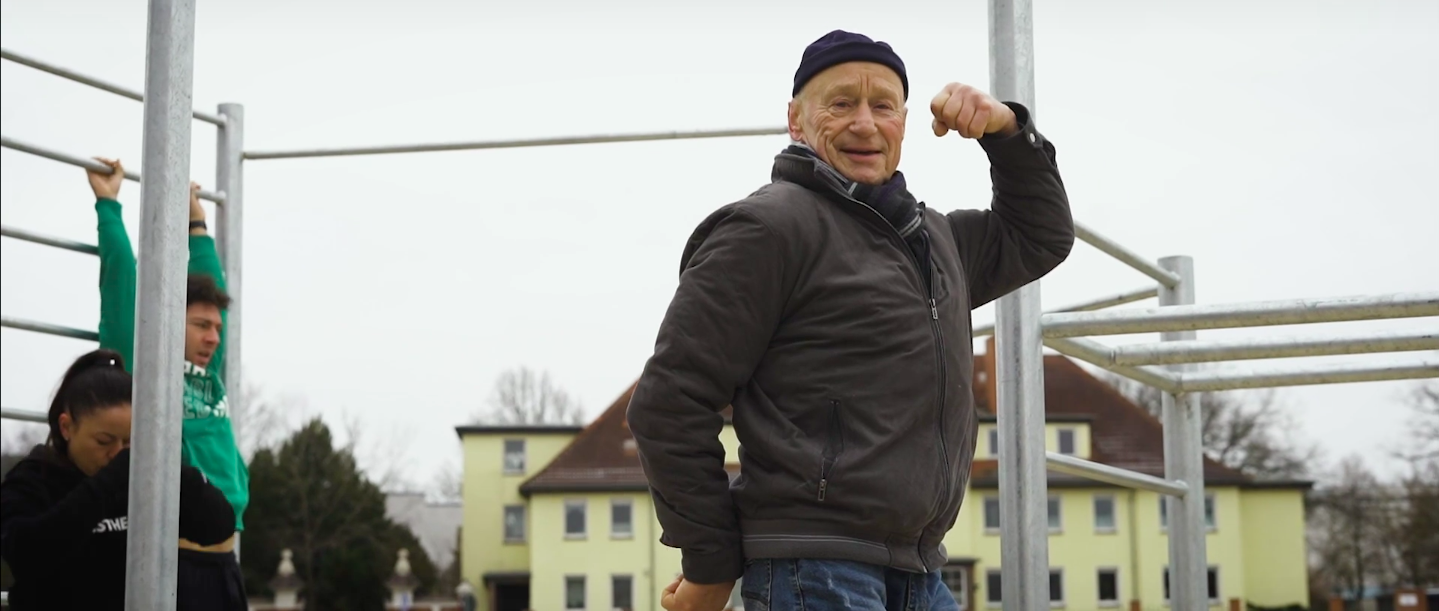
Why Lower Back Pain Is a Posture Problem First
Chronic lower back pain is one of the most common complaints among adults over 40 — and one of the most misunderstood. Many people assume it stems from a single injury or a structural defect. In reality, the majority of non-specific lower back pain is a postural and muscular imbalance problem: the anterior chain (hip flexors, chest, abdominals) becomes chronically shortened and dominant, while the posterior chain (glutes, hamstrings, mid-back, deep spinal stabilisers) weakens from disuse.
The result is a forward-tilted pelvis, a rounded thoracic spine, and a lumbar region that compensates by over-extending — a recipe for persistent pain, stiffness, and reduced mobility. The good news: this imbalance is correctable through targeted movement, and two of the most effective tools are hang variations and bodyweight rows — both of which can be performed on a well-designed outdoor calisthenics bar.
The Biomechanics of Hanging: Spinal Decompression and Shoulder Health
When you hang from a bar with your feet off the ground, gravity does something remarkable: it gently decompresses the intervertebral discs of the lumbar and thoracic spine. The compressive forces that accumulate from hours of sitting, standing, and carrying loads are temporarily reversed. Many physiotherapists recommend passive hanging as a daily practice for patients with disc-related lower back issues.
But hanging is not just passive relief — it is also active training when performed with intention.
Key Hang Variations for Back Health
| Variation | Primary Benefit | Difficulty |
|---|---|---|
| Passive Dead Hang | Lumbar decompression, grip strength | Beginner |
| Active Hang (scapular depression) | Shoulder stability, upper-back activation | Beginner–Intermediate |
| Scapular Pull-Up | Serratus anterior, lower trapezius | Intermediate |
| Arch Body Hang | Full posterior chain tension, lat engagement | Intermediate |
| L-Sit Hang | Hip flexor strength, core anti-extension | Advanced |
Passive Dead Hang: Simply grip the bar with both hands, let your feet leave the ground, and relax your shoulders. Hold for 20–60 seconds. This alone, performed daily, can meaningfully reduce lumbar compression and improve shoulder mobility over weeks.
Active Hang: From the dead hang position, depress and retract your shoulder blades — think "put your shoulders in your back pockets." This activates the lower trapezius and serratus anterior, two muscles chronically underactive in people with rounded-shoulder posture. Hold for 5–10 seconds, release, repeat.
Scapular Pull-Up: Without bending the elbows, elevate and then depress the shoulder blades in a controlled rhythm. This is the foundational movement for pull-up strength and a powerful corrective for shoulder impingement.
Bodyweight Rows: The Antidote to Desk Posture
If hanging addresses the spine and shoulder girdle from above, bodyweight rows address the mid-back from a horizontal pulling angle — and this is where the real postural correction happens.
The muscles targeted by rows — rhomboids, middle and lower trapezius, rear deltoids, and biceps — are precisely the muscles that pull the shoulder blades back and down, counteracting the forward rounding that drives lower back pain. A weak mid-back cannot hold the thoracic spine upright; the lumbar region then over-extends to compensate, and pain follows.
How to Perform Bodyweight Rows on Outdoor Bars
On a calisthenics park with a low horizontal bar or a dedicated row station (such as the simplified pull-up bar in Exercise Field C of the BARbara system), the setup is straightforward:
- Position yourself under the bar with your chest facing upward.
- Grip the bar with both hands, shoulder-width apart.
- Extend your legs and keep your body in a straight line from heels to shoulders.
- Pull your chest to the bar by driving your elbows back and squeezing your shoulder blades together.
- Lower with control — the eccentric phase is equally important for muscle development.
Progression options:
- Easier: Bend your knees and place feet flat on the ground.
- Harder: Elevate your feet on a bench or step; add a pause at the top.
- Advanced: Perform with a towel or rings for increased instability and grip demand.
Why Rows Beat Machine Rows for Functional Health
Machine rows in a gym isolate the pulling muscles but remove the stabilisation demand. Bodyweight rows require the entire posterior chain to co-contract: glutes, hamstrings, and spinal erectors must hold the body rigid throughout the movement. This makes every repetition a full-body stability exercise — exactly what the lower back needs.
A Weekly Protocol for Adults 40+
Consistency matters more than intensity, especially for adults over 40 whose connective tissue adapts more slowly than muscle. The following protocol is designed to be performed 3–4 times per week at an outdoor fitness park:
Session Structure (20–30 minutes)
Warm-Up (5 minutes)
- Shoulder circles: 10 each direction
- Cat-cow spinal mobilisation: 10 repetitions
- Hip flexor stretch: 30 seconds each side
Main Work (15–20 minutes)
| Exercise | Sets | Reps / Duration | Rest |
|---|---|---|---|
| Passive Dead Hang | 3 | 30–45 seconds | 60 sec |
| Active Hang (scapular depression) | 3 | 8–10 reps | 60 sec |
| Bodyweight Row | 3 | 8–12 reps | 90 sec |
| Scapular Pull-Up | 2 | 6–8 reps | 60 sec |
Cool-Down (5 minutes)
- Child's pose: 60 seconds
- Doorway chest stretch (or bar-assisted): 30 seconds each side
- Standing hamstring stretch: 30 seconds each side
Note for physiotherapists: This protocol is appropriate for patients with non-specific chronic lower back pain and no acute disc herniation. Passive hanging should be avoided in patients with active nerve root compression until cleared by a specialist.
The Role of Equipment Design in Exercise Quality
Not all outdoor bars are created equal. Many public fitness installations — particularly those designed by playground manufacturers who have entered the calisthenics market — suffer from critical design flaws: bars set at incorrect heights, insufficient clearance for free hanging, grip diameters that are too thin or too thick, and stations positioned so close together that swinging movements are blocked.
The BARbara calisthenics park system, developed by GhettoWorkout e.V. from Dessau — a calisthenics association with over 13 years of competitive experience — was designed specifically to avoid these problems. Every bar height, grip width, and station spacing was determined by athletes who train these movements daily. The hexagonal arrangement of the system means that multiple exercise fields coexist in a compact footprint without interfering with each other.
BARbara is manufactured in compliance with DIN EN 16630, the German and European standard for outdoor fitness equipment, ensuring structural safety and legal compliance for public installations. Three material variants are available — hot-dip galvanised steel, galvanised with powder coating (available in custom colours), and stainless steel V2A — each designed for decades of outdoor use with minimal maintenance.
The integrated QR-code training system on every BARbara information board links directly to guided workout videos across four levels: Beginner, Intermediate, 50+, and Pro. The dedicated 50+ level is particularly relevant for adults managing lower back pain, offering modified progressions that respect reduced joint mobility and longer recovery times.
Building the Habit: Why Outdoor Parks Lower the Barrier
One of the most consistent findings in exercise adherence research is that proximity and accessibility are the strongest predictors of whether people actually show up. A calisthenics park in a public green space, along a running route, or within a residential quarter removes the friction of gym membership, travel time, and opening hours.
For adults over 40 managing lower back pain, this matters enormously. The exercises described in this article require no equipment beyond a pull-up bar and a low horizontal bar — both standard features of a well-designed outdoor fitness park. A 20-minute session three times per week is sufficient to produce measurable improvements in posterior chain strength and postural alignment within 6–8 weeks.
Municipalities, housing associations, and sports clubs that invest in quality outdoor fitness infrastructure are not just providing a recreational amenity — they are providing a preventive health intervention that reduces the burden of musculoskeletal complaints in their communities.
Conclusion
Lower back pain in adults over 40 is rarely a structural inevitability. In most cases, it is the predictable consequence of a sedentary lifestyle that shortens the anterior chain and weakens the posterior chain. Hang variations decompress the spine and restore shoulder mobility; bodyweight rows rebuild the mid-back strength that holds posture upright. Together, performed consistently on a properly designed outdoor bar, they address the root cause rather than the symptom.
If you are a municipality, sports club, or facility operator considering an outdoor fitness installation that genuinely serves the health needs of your community — including adults managing lower back pain — we invite you to explore what a BARbara calisthenics park can offer. Contact us at outdoorfitnessparks.com/contact to discuss your project, request a consultation, or learn more about DIN EN 16630-compliant equipment options.