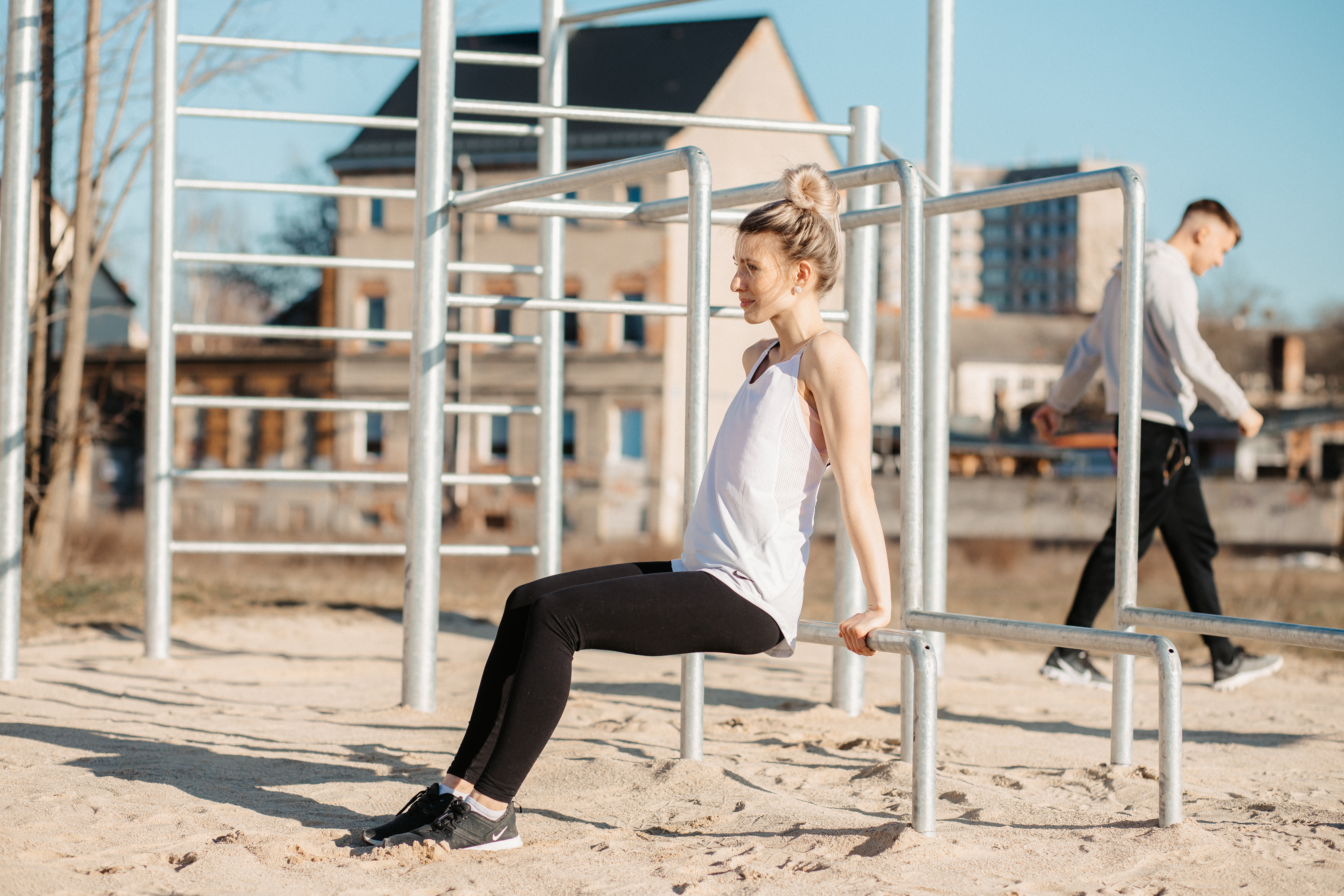
Weather Resistance: How High-Grade Steel Withstands Rain, UV Rays, and Sub-Zero Winters
Outdoor fitness equipment is a long-term infrastructure investment. Unlike indoor gym machines sheltered from the elements, a calisthenics park or outdoor fitness station must endure everything the climate throws at it — driving rain, intense summer UV radiation, freeze-thaw cycles, and the slow creep of atmospheric corrosion. For architects, site managers, and facility managers evaluating equipment, understanding the material science behind weather resistance is not optional: it is the foundation of a sound procurement decision.
This article examines the three steel variants available for BARbara calisthenics parks, explains the protective mechanisms each provides, and gives you the technical framework to match material choice to site conditions.
Why Weather Resistance Matters for Public Fitness Infrastructure
A poorly specified material choice does not just mean rust stains on a pull-up bar. It means:
- Structural weakening — corrosion reduces cross-sectional area, lowering load capacity over time.
- Surface degradation — flaking coatings create sharp edges and harbour bacteria.
- Increased maintenance costs — repainting, re-coating, or early replacement erodes the return on investment.
- Liability exposure — under DIN EN 16630 (the European standard for outdoor fitness equipment), operators are responsible for maintaining equipment in a safe condition. Degraded surfaces can trigger mandatory decommissioning.
Choosing the right material from the outset eliminates most of these risks.
The Three Material Variants: A Technical Comparison
BARbara calisthenics parks are manufactured in three distinct material configurations, each suited to different site conditions and budget parameters.
Variant 1: Hot-Dip Galvanized Steel
Hot-dip galvanizing is the baseline protection method — and it is far more robust than the term "galvanized" might suggest to the uninitiated.
The process: Steel components are cleaned, fluxed, and immersed in a bath of molten zinc at approximately 450 °C. The zinc reacts metallurgically with the steel surface, forming a series of zinc-iron alloy layers topped by a pure zinc outer layer. This is not a coating applied on top of the steel — it is a metallurgical bond.
Why it works against rain and humidity: Zinc is anodically active relative to steel. When moisture is present, zinc corrodes preferentially, sacrificing itself to protect the underlying steel. This cathodic protection mechanism means that even if the zinc layer is scratched or mechanically damaged, the exposed steel remains protected by the surrounding zinc.
Why it works against sub-zero temperatures: Unlike paint or polymer coatings, the zinc-iron alloy layers do not become brittle at low temperatures. The bond remains intact through repeated freeze-thaw cycles, making hot-dip galvanized steel the standard choice for road signage, bridge components, and outdoor infrastructure in continental climates — exactly the reference class the BARbara manufacturer draws on.
Expected service life: Hot-dip galvanized structural steel in a moderate Central European climate typically achieves 40–70 years before the zinc layer is consumed to the point where re-treatment would be needed. In practice, a well-specified galvanized calisthenics park will outlast multiple generations of users.
Variant 2: Hot-Dip Galvanized + Powder Coated
This variant adds a polymer powder coat over the galvanized substrate, combining the cathodic protection of zinc with the UV and colour stability of a thermoset polymer layer.
The powder coating process: Electrostatically charged polymer powder is applied to the galvanized surface and cured in an oven at 160–200 °C, forming a continuous, pore-free film typically 60–120 µm thick.
UV resistance: Uncoated zinc develops a dull grey patina over time — aesthetically neutral but not always desirable in designed public spaces. More importantly, UV radiation alone does not degrade galvanized steel, but it can affect the visual appearance of the zinc patina. A powder coat, formulated with UV-stable pigments and resins, maintains colour fidelity and surface gloss for 10–15 years under normal outdoor exposure before any refinishing is warranted.
Design flexibility: This variant enables colour specification — municipal corporate colours, club colours, or park design concepts can be integrated directly into the equipment. The BARbara system supports custom colour specification, allowing the installation to become a coherent element of the surrounding landscape or urban design.
Maintenance note: If the powder coat is mechanically damaged (impact, vandalism), the underlying galvanized layer continues to provide corrosion protection. The damage is cosmetic rather than structural, and localised touch-up is straightforward.
Variant 3: Stainless Steel V2A
Stainless steel grade V2A (equivalent to EN 1.4301 / AISI 304) is the premium material choice, specified for sites where corrosion risk is elevated or where a maintenance-free service life is the primary requirement.
Corrosion mechanism: V2A stainless steel contains a minimum of 18% chromium, which forms a self-repairing passive oxide layer (Cr₂O₃) on the surface. This layer is invisible, only a few nanometres thick, and reforms spontaneously if mechanically disrupted — as long as oxygen is present. The result is a surface that does not rust under normal atmospheric conditions, including coastal proximity, high humidity, and acid rain.
UV resistance: Unlike polymer coatings, the passive oxide layer of stainless steel is not degraded by UV radiation. The surface appearance remains stable indefinitely without any protective treatment.
Sub-zero performance: Austenitic stainless steels (the family to which V2A belongs) maintain excellent toughness and ductility at cryogenic temperatures, far below any outdoor winter condition encountered in Central Europe. Freeze-thaw cycling has no effect on the passive layer or the base material.
Vandalism resistance: The BARbara system is engineered with concealed fasteners — bolts are recessed and interlocked rather than exposed. In the V2A variant, this design philosophy is reinforced by the material's inherent hardness and resistance to surface attack. The manufacturer notes that once installed and concreted in, the structure requires heavy cutting equipment to compromise — a significant deterrent.
Material Selection Guide by Site Condition
| Site Condition | Recommended Variant | Rationale |
|---|---|---|
| Inland, moderate climate | Hot-dip galvanized | Decades of proven performance, lowest cost |
| Urban / designed public space | Galvanized + powder coated | Colour integration, UV-stable appearance |
| Coastal / high humidity | Stainless steel V2A | Chloride-resistant passive layer |
| High vandalism risk | Stainless steel V2A | Surface hardness, no coating to strip |
| School / residential complex | Galvanized + powder coated | Colour branding, child-safe surface |
| Municipal infrastructure | Any variant | DIN EN 16630 compliance across all three |
DIN EN 16630 Compliance and Operator Obligations
All three BARbara material variants are manufactured in compliance with DIN EN 16630, the European standard governing permanently installed outdoor fitness equipment. This standard specifies requirements for structural integrity, surface finish, and resistance to environmental degradation.
For operators, DIN EN 16630 compliance means:
- Pre-opening inspection by a certified inspector is mandatory before the equipment is opened to the public.
- Annual functional inspection must be carried out thereafter.
- Regular visual inspections (frequency determined by usage intensity and site conditions) are the operator's ongoing responsibility.
The material choice directly affects inspection outcomes. A hot-dip galvanized structure in good condition will pass visual and functional inspections for decades. A poorly specified or inadequately maintained coating system may generate findings that require remediation — and associated costs.
Regional Production and Quality Assurance
BARbara is manufactured in serial production within the manufacturer's own district in Germany. Regional production has a direct bearing on material quality: supply chains are short, material provenance is traceable, and quality control is applied at each production stage. This is not a product assembled from globally sourced components with variable specification — it is a system where the material standards described above are consistently applied.
Serial production also means stock availability. Unlike bespoke fabrication projects that require months of lead time, BARbara installations can be delivered and installed within a timeframe that aligns with typical municipal or commercial project schedules.
Practical Implications for Long-Term Budget Planning
For facility managers and site managers responsible for lifecycle cost modelling, the material choice has direct budget implications:
- Hot-dip galvanized: Lowest upfront cost, minimal maintenance for 20–30 years, then periodic inspection to assess zinc layer thickness.
- Galvanized + powder coated: Moderate upfront premium, cosmetic maintenance (touch-up) possible if coating is damaged, full refinishing may be warranted after 15+ years.
- Stainless steel V2A: Highest upfront cost, lowest lifetime maintenance cost, no coating to maintain or replace.
For public installations where maintenance budgets are constrained and service life expectations exceed 25 years, the V2A variant often represents the lowest total cost of ownership despite the higher initial investment.
Conclusion
Weather resistance in outdoor fitness equipment is not a marketing claim — it is an engineering outcome determined by material selection, manufacturing process, and design detail. Hot-dip galvanizing provides cathodic protection that outlasts most infrastructure planning horizons. Powder coating adds UV stability and design flexibility without compromising the underlying protection. Stainless steel V2A eliminates corrosion risk entirely for the most demanding site conditions.
All three variants available for BARbara calisthenics parks are DIN EN 16630 compliant and manufactured to consistent quality standards in regional serial production. The right choice depends on your site conditions, design requirements, and lifecycle cost priorities.
To discuss material specification for your project and receive a tailored recommendation, contact the OutdoorFitnessParks team at https://outdoorfitnessparks.com/contact.